Prophet Muhammad's Character: The Man Behind the Message
Get the 109‑page guide delivered to your inbox
Discover the faith that 1.9 billion people live by — and why thousands of truth-seekers just like you are choosing it every single day. This free 109-page guide walks you from curiosity to clarity, step by step.
No pressure. No judgment. No strings attached. Just a clear, honest roadmap written for people who want real answers — whether you're skeptical, curious, confused, or quietly searching for something deeper.
You've probably heard his name thousands of times. You may have seen it written in Arabic calligraphy on mosque walls or heard it spoken in news coverage — often without context, often without care. But when you actually sit with the question of who Prophet Muhammad ﷺ was as a person, what kind of man walked the streets of Mecca and Medina fourteen centuries ago, something shifts. The image most people have picked up from headlines doesn't survive a serious encounter with the historical record.
Prophet Muhammad's character is not a matter of religious loyalty. It's a matter of history. And what history gives us is a man who was, by any reasonable measure, one of the most honest, generous, and emotionally present human beings ever recorded.
What's rarer still is that the people who provide the most compelling testimony about him are not only his followers. His opponents, his neighbors, and people who observed him across decades of difficult public life said the same things. That kind of consistency is hard to manufacture.
What His Enemies Said About Him
This is where I always want to start, because it matters. The Quraysh, the leaders of Mecca, opposed Muhammad ﷺ for most of his prophetic mission. They mocked him, boycotted his community, tortured his companions, and eventually tried to assassinate him. They were not his admirers. And yet, even as they persecuted him, they continued to trust him with their valuables.
He had been given the title Al-Amin — the Trustworthy — years before the first revelation came. Not by his followers. By the same people who would later reject him. When he was instructed to migrate to Medina, he asked his cousin Ali to stay behind and return all the property the people of Mecca had entrusted to him. His enemies' belongings. He made sure every item was returned before he left.
That is not the behavior of a man interested in power or manipulation. A man seeking personal gain does not return his opponents' wealth as his first act of departure.
The theologian Ibn Taymiyyah noted centuries later that anyone who genuinely claims prophethood and is lying will be exposed through the cracks that appear between their public persona and their private conduct. The private life reveals the person. What the historical record shows of Muhammad's ﷺ private life is entirely consistent with what his most difficult enemies said about him publicly.
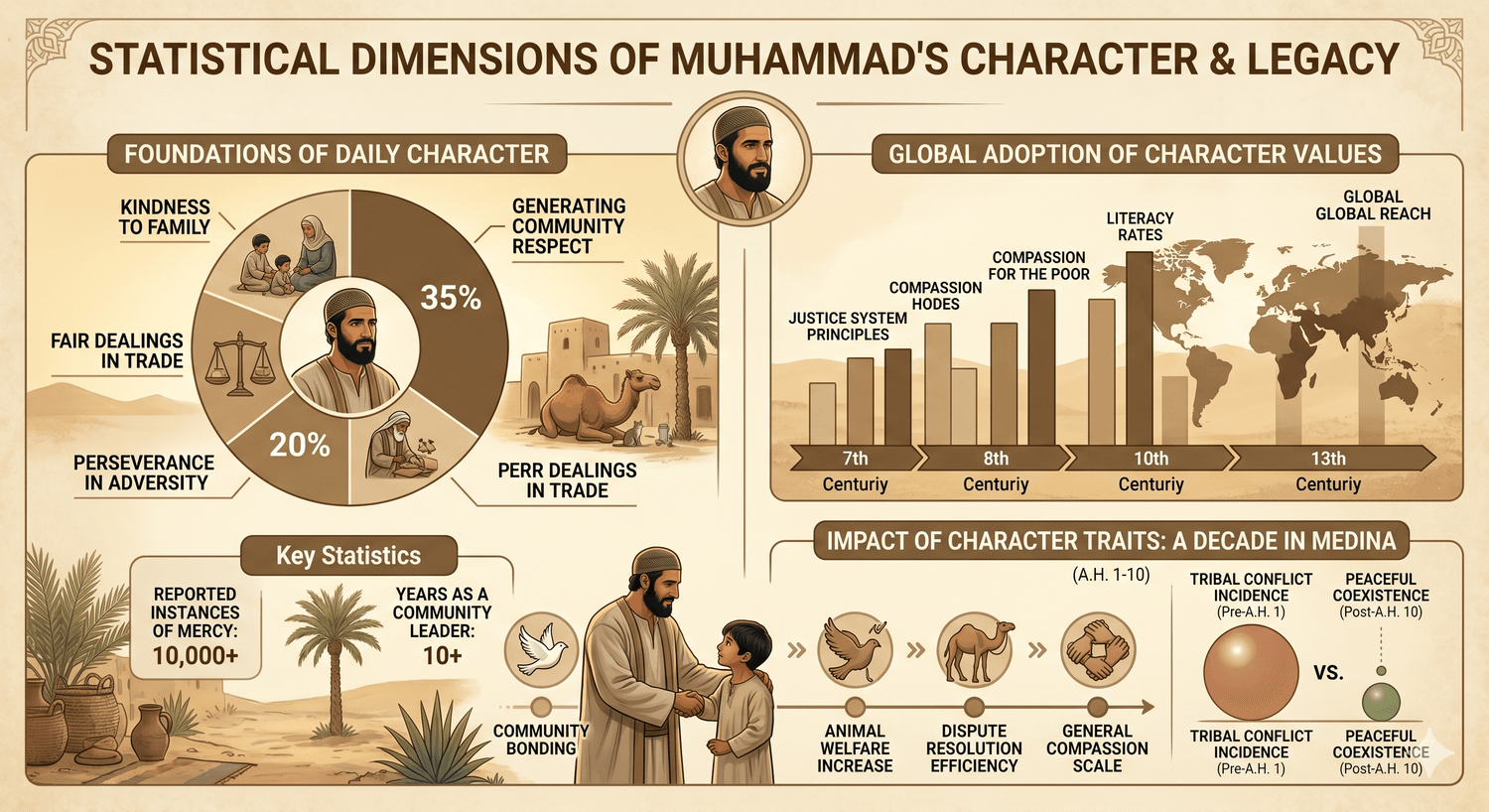
His Honesty Was a Habit, Not a Performance
Prophet Muhammad's character when it came to truthfulness wasn't something he performed for an audience. He said, as recorded in Sahih Bukhari, "Truthfulness leads to righteousness and righteousness leads to Paradise." He said this, but more importantly, he lived it so consistently that his reputation preceded any formal introduction.
There's a documented account of a Jewish scholar named Zayd ibn Sa'nah who came with the deliberate intention of testing the Prophet ﷺ. He had studied prophecy and was looking for specific signs. What ultimately led him to accept Islam wasn't any miracle. It was watching the Prophet's composure and patience in a moment when most people would have reacted with irritation. He had loaned money to the Prophet and came to collect it aggressively, before the debt was even due, while the Prophet was in the company of companions. The Prophet did not retaliate with anger. He arranged for the debt to be settled immediately, and then spoke kindly about the scholar's behavior. The character was the proof.
When his infant son Ibrahim died, a solar eclipse coincided with the event. Some companions eagerly suggested the eclipse was a cosmic sign of mourning for the Prophet's loss. He corrected them immediately and publicly. "The sun and the moon do not eclipse for the death or the life of any person." No personal mythology. No allowing people to build a story that would serve his reputation. He chose accuracy over flattery directed at himself.
The Shape of His Compassion
One of the threads running through Prophet Muhammad's character is that his compassion was not selective. It did not require reciprocation. It was not limited to people who agreed with him, looked like him, or were useful to him.
There was a woman in Mecca who made a habit of throwing trash on him whenever he passed her house. When she fell ill, he visited her. Not to confront her. Not to demonstrate moral superiority. Because a neighbor was sick. She was so disarmed by the visit that she eventually accepted Islam. Not because he argued with her. Because he showed up.
He wept at the death of a Jewish boy he had been visiting during the boy's illness. When a funeral procession passed and he stood in respect, companions told him it was a Jewish man's funeral. He said, "Was he not a soul?" (Bukhari). There is no theology being deployed in that response. No careful distinction being drawn between categories of people. Just the instinct, immediate and unqualified, to honor a human life.
The Conquest of Mecca in 630 CE is perhaps the most significant public demonstration of his character at scale. The city that had expelled him, tortured his companions, and killed family members was taken without significant bloodshed. He stood at the Kaaba and asked the people who had done him the most harm, "What do you expect from me?" They said they expected generosity from a noble brother. He said, "Go, for you are free." Abu Sufyan, one of his most persistent adversaries for decades, walked away without consequence. The man who had organized economic boycotts, military campaigns, and assassination attempts against the Prophet was simply released.
This is not a man whose compassion required being earned.
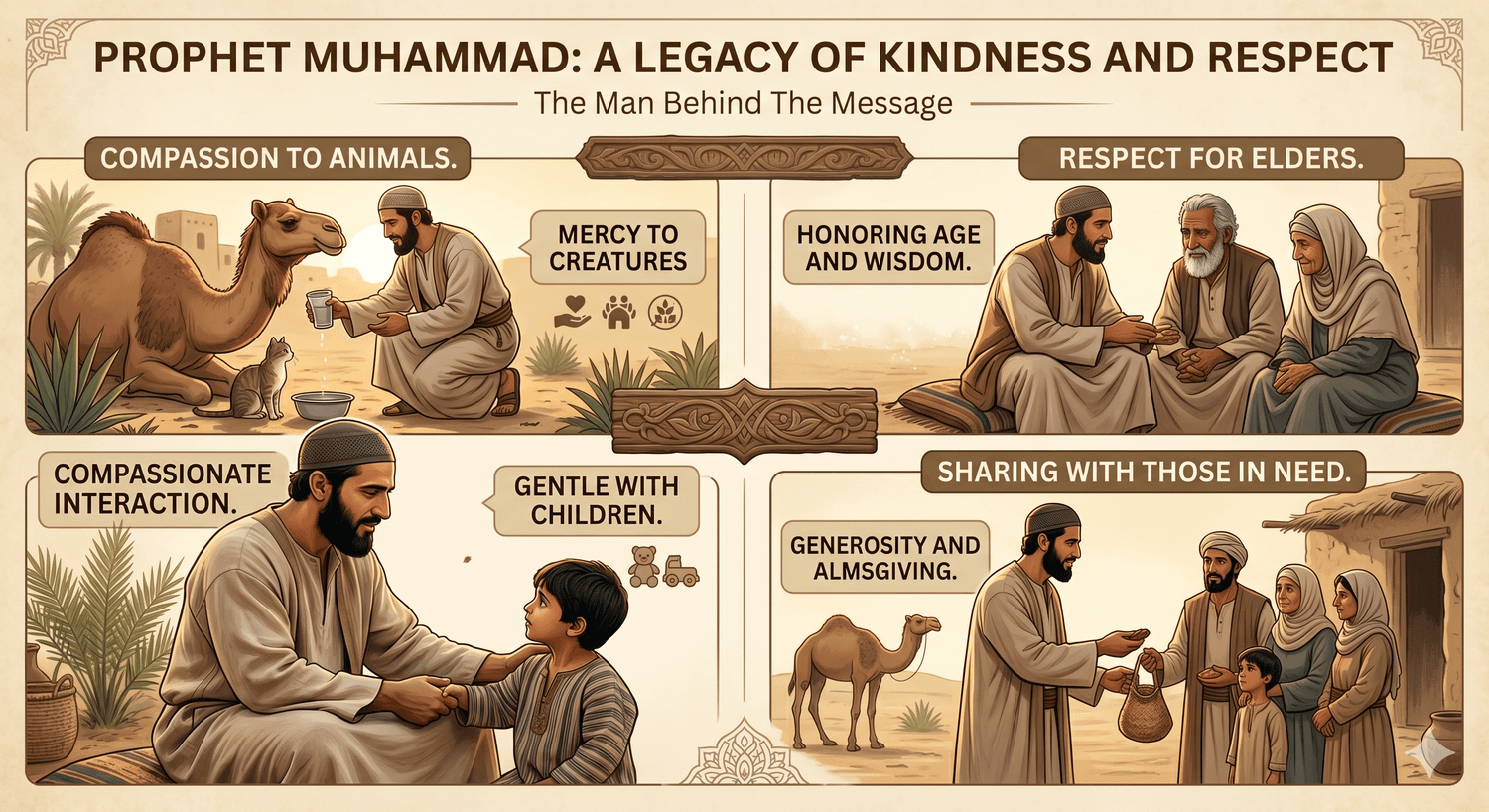
He Laughed — and That Tells You Something
There is a tendency to picture religious figures as permanently solemn, as if gravity were evidence of depth. Prophet Muhammad's character was nothing like that. The companion Abdullah ibn al-Harith described him saying, "I have never seen anyone who smiles more than the Prophet does." (Tirmidhi). He joked with companions. He raced with his wife Aisha in the open. He played with children enthusiastically enough that they would race toward him whenever he appeared.
Once, an elderly woman asked him to pray for her admission to Paradise. He told her, with a smile, that no old women enter Paradise. She was distressed until he explained — because they would be made young again before entering. The joke had a theological punchline. He never joked with lies, and he never laughed at another person's expense. His humor was warm and never weaponized.
This matters because it tells you about the texture of his daily life. He was not a public figure performing piety for an audience. He was a person — present, warm, and genuinely engaged with the people around him. The solemnity came when it was called for. The warmth was the default.
The Prophet at Home
What most people never learn about Prophet Muhammad's character is what it looked like in private. In a 7th-century Arab culture where household labor was considered beneath men, he mended his own sandals, sewed his own clothes, and helped with household chores. His wife Aisha was asked what he did at home. She said, "He was in the service of his family, and when the time of prayer came, he would go out to pray." (Bukhari).
He carried the infant Umamah, his granddaughter, on his shoulders during prayer — gently placing her down when he prostrated and lifting her again when he rose. This detail is not theological. It is not a miracle or a sign. It is the mundane, intimate record of a man who was the same person in public and in private.
He explicitly forbade men from striking their wives when the practice was common. He said, "The best of you are those who are best to their wives." (Tirmidhi). He did not just say this as instruction. His own conduct with his wives was marked by consultation, affection, and genuine companionship. When his first wife Khadijah died after twenty-five years of marriage, he continued to speak of her with such warmth and gratitude that his later wife Aisha, who had never met Khadijah, admitted to feeling a kind of jealousy toward a woman who had died long before she arrived.
His Patience Under Pressure
Prophet Muhammad's character was not formed in comfort. He was orphaned before birth and lost his mother at age six. He raised his children knowing that most of them would die before him — six of his seven children died during his lifetime. He was stoned in the city of Taif, driven out by its people while bleeding, and his response when an angel offered to destroy the city was to pray instead for the welfare of their descendants.
He faced thirteen years of open persecution in Mecca before the migration to Medina. He spent three years with his community confined to a valley during an economic boycott so severe that his companions were reduced to eating leaves. He buried two of his wives. He buried his son. He watched his closest companions tortured to death. And across all of it, the record shows a man who did not become bitter, did not abandon his values in moments of power, and did not use suffering as an excuse to cause suffering.
The Quran speaks directly to his character: "And indeed, you are of a great moral character" (Quran 68:4). This verse was revealed while he was being publicly mocked and called a madman by his opponents. The divine affirmation did not come in a moment of triumph. It came in a moment of pressure. That timing is itself a kind of instruction.
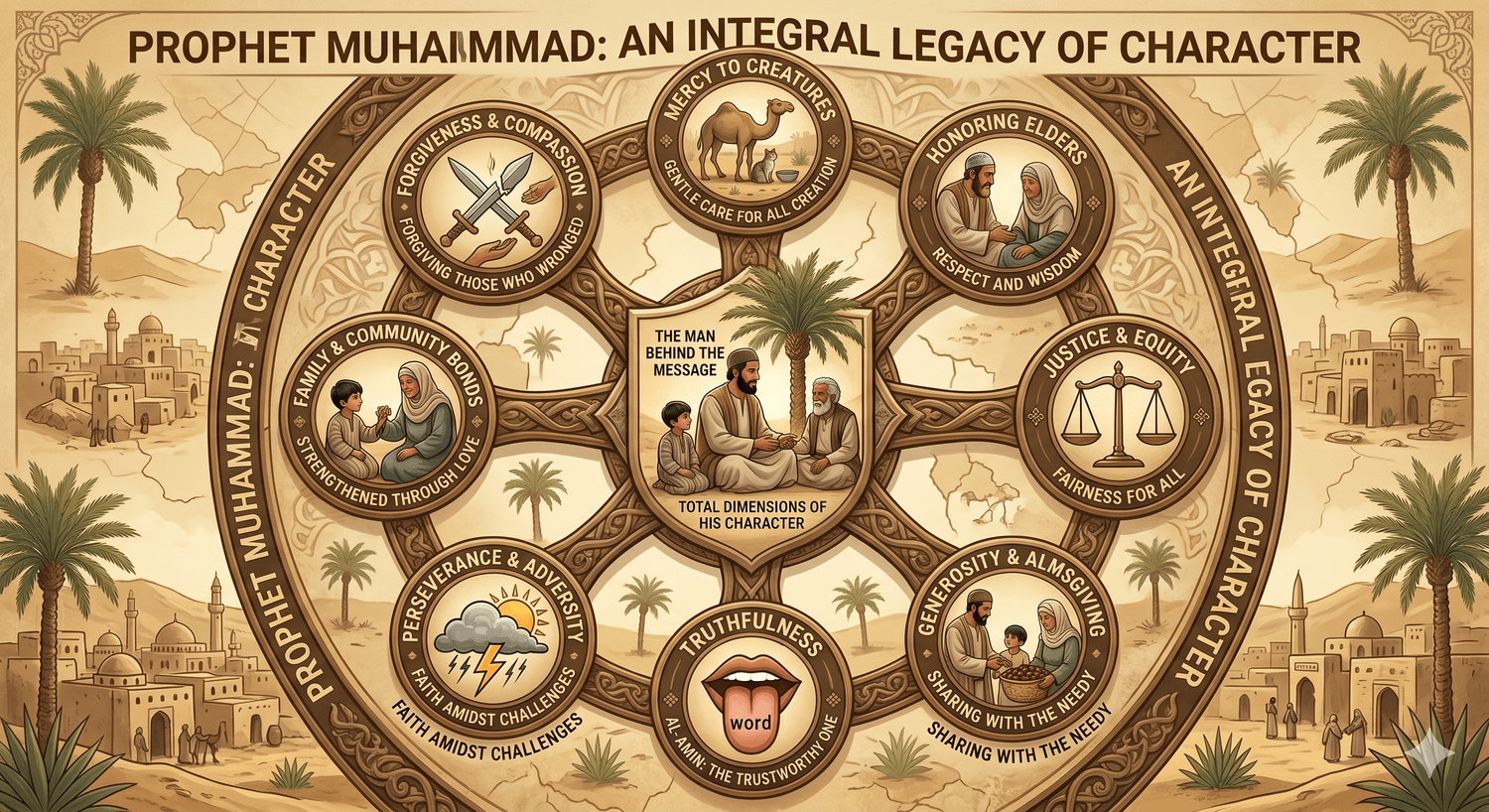
The Consistency That Proves the Point
What is hardest to explain by any other theory — by the theory of imposture, or political ambition, or psychological crisis — is the consistency. Twenty-three years of prophetic mission. Thirteen years of persecution followed by ten years of expanding responsibility and political leadership.
The same values, the same habits, the same character, across every phase of a life that changed radically from one decade to the next.
When he had no power, he was honest and patient. When he had enormous power, he returned debts to enemies and released cities that had wronged him. The relationship between character and circumstance is what exposes people eventually. In his case, the circumstance changed completely and the character didn't.
That is the argument for his prophethood that his character makes. Not a logical syllogism, not a miracle, but the simple observation that this kind of consistency, across this kind of life, is extremely rare. His clansmen called him Al-Amin before they had any reason to love him. That title was given by skeptics. It was earned in the smallest, most private details of daily life. That, more than almost anything else said about him from outside his tradition, is worth sitting with seriously.
Why This Matters for You
If you are new to Islam or simply curious about who this man actually was, I would encourage you to read his biography — his seerah — the way you would read about anyone worth understanding. Not through someone else's summary, not through caricature from either direction. The historical record of his life is unusually detailed. His companions preserved his sayings, his habits, even his silences with meticulous care.
What you'll find is not a war general who happened to also pray. You'll find a human being who took his own humanity seriously and expected the same from those around him. A man who wept, who laughed, who repaired his own sandals, who visited sick neighbors, who freed people from debt, who forgave enemies who had caused him genuine harm. A man who, when God told him he was of a great moral character, had already been living that way for forty years.
Prophet Muhammad's character is the clearest lens through which Islam itself can be understood. Because his life, more than any theological argument, shows what the religion is actually for.
If you want to explore the Prophet's life and what Islam actually teaches, browse our courses at Start Islam Path — built for people who ask real questions and want real answers.


