Islamophobia in America: Understanding the Growing Crisis
Get the 109‑page guide delivered to your inbox
Discover the faith that 1.9 billion people live by — and why thousands of truth-seekers just like you are choosing it every single day. This free 109-page guide walks you from curiosity to clarity, step by step.
No pressure. No judgment. No strings attached. Just a clear, honest roadmap written for people who want real answers — whether you're skeptical, curious, confused, or quietly searching for something deeper.
Islamophobia in America has reached alarming levels in recent years. This discrimination affects millions of Muslim Americans daily. From workplace bias to violent hate crimes, the problem continues to grow. Understanding Islamophobia in America helps us build a more inclusive society. This article explores the issue in depth.
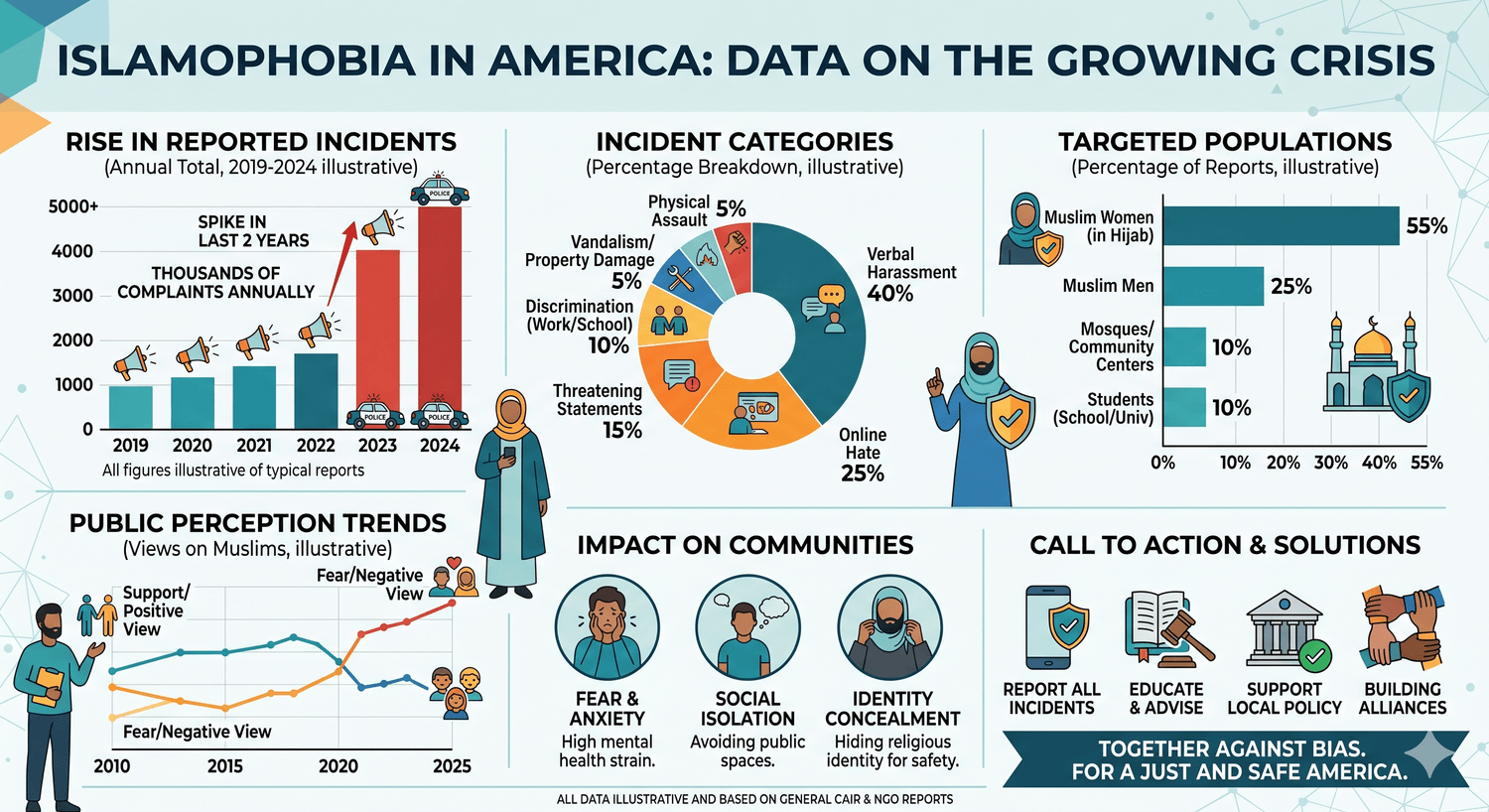
The Council on American-Islamic Relations received over 8,600 complaints in 2024. This represents the highest number since tracking began in 1996. These aren't just statistics. They're real people facing real discrimination. Muslim Americans experience harassment at school, work, and in public spaces. The impact extends beyond individual incidents. It affects entire communities.
Islamophobia in America isn't new. It existed long before September 11, 2001. However, anti-Muslim sentiment has intensified over the past two decades. Recent global events have triggered new waves of discrimination. Political rhetoric and media coverage often fuel negative stereotypes. This creates a cycle of fear and misunderstanding. Breaking this cycle requires education, awareness, and action. Together, we can address this serious issue.
Understanding Islamophobia in America
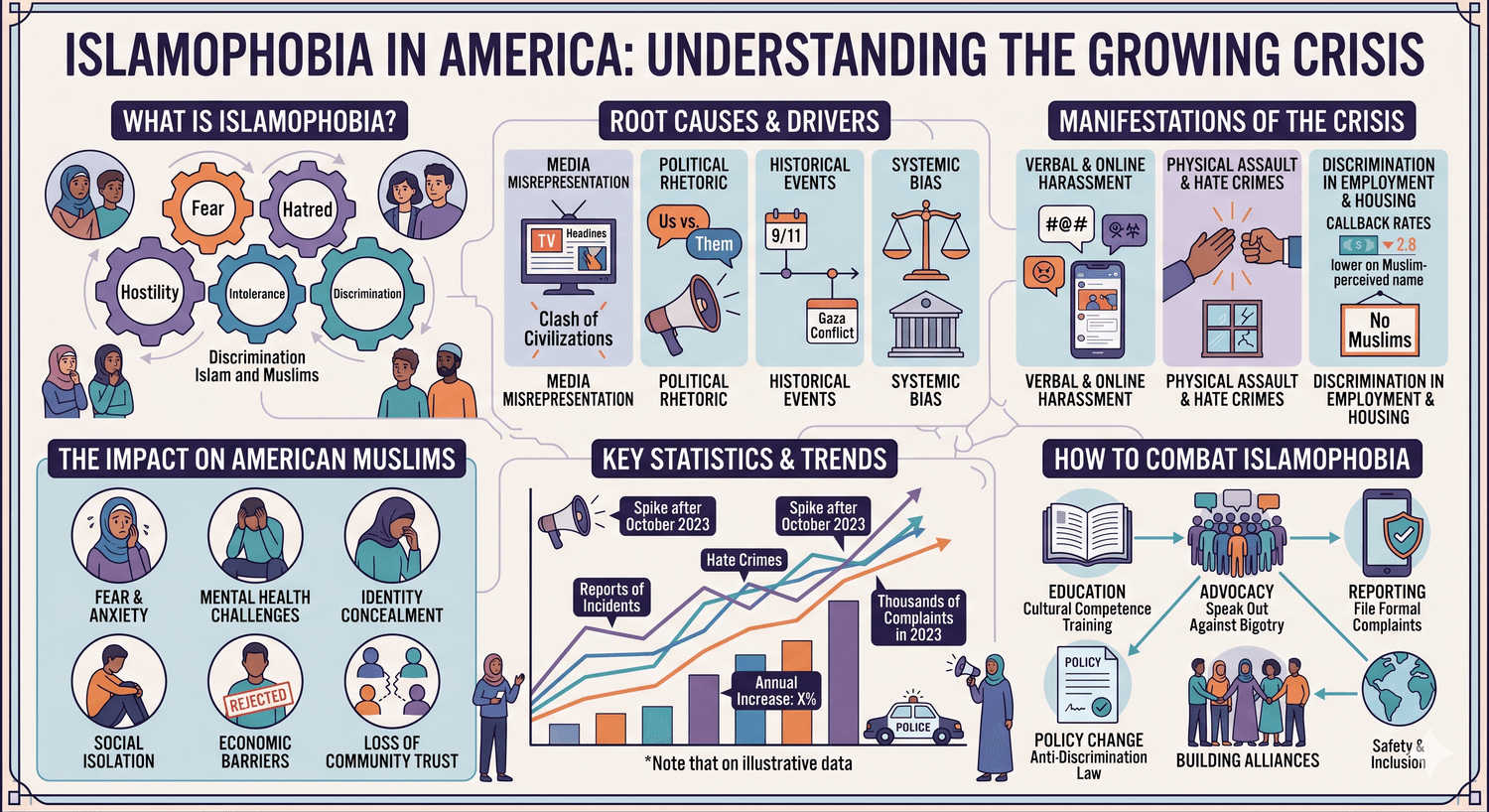
Islamophobia in America takes many forms. It ranges from individual prejudice to institutional discrimination. Recognizing these different types helps us fight back effectively. The problem operates at multiple levels. Each level requires specific solutions. Understanding the scope helps create targeted interventions. Knowledge is the first step toward change.
What Islamophobia in America Actually Means
Islamophobia in America refers to fear and hatred of Muslims. It includes stereotypes about Islam and Muslim communities. This prejudice affects how people treat Muslim Americans. The term covers both individual acts and systemic discrimination. Understanding the definition helps identify the problem.
Research defines Islamophobia in America as irrational fear or aversion. It involves discrimination against Islam and those who practice it. This goes beyond simple dislike. It manifests in violence, harassment, and exclusion. The fear often stems from misinformation and negative stereotypes.
Many Americans hold misconceptions about Muslims. These false beliefs fuel discriminatory attitudes. Common stereotypes link Muslims to violence and terrorism. Such generalizations harm innocent people. Combating these myths requires education and direct engagement with Muslim communities.
The History of Islamophobia in America
Islamophobia in America didn't start with 9/11. Anti-Muslim sentiment existed decades earlier. The Iranian Revolution in 1979 shifted media coverage. News outlets began portraying Muslims more negatively. This created a foundation for future discrimination.
The 1980s saw stereotypes about Middle Eastern communities increase. Media often depicted Arabs and Muslims as threats. The 1996 Antiterrorism Act expanded government surveillance. Muslim Americans faced increased scrutiny and deportations. These policies normalized discrimination.
September 11, 2001 marked a dramatic turning point. Hate crimes against Muslims jumped 500 percent. The attacks justified new policies targeting Muslim communities. Guantánamo Bay and enhanced interrogation followed. Legal frameworks institutionalized anti-Muslim bias throughout America.
How Islamophobia in America Operates Today
Interpersonal Islamophobia in America involves individual acts of discrimination. People face verbal harassment and physical attacks. Muslim women wearing hijabs experience higher rates of assault. These incidents occur in public spaces, stores, and streets. Daily microaggressions wear people down.
Institutional Islamophobia in America operates through policies and laws. States have introduced over 230 anti-Sharia bills since 2010. Twenty bills became law in 13 states. These laws target Muslim religious practices. They create legal barriers for Muslim Americans.
Structural Islamophobia in America shapes entire systems. Law enforcement profiles Muslims at airports and borders. Schools and workplaces implement discriminatory policies. Media coverage reinforces negative stereotypes. The FBI watchlist disproportionately targets Muslim activists and advocates.
The Scale of Islamophobia in America Today
Recent data shows Islamophobia in America is increasing. CAIR received 8,658 complaints in 2024 alone. This represents a 7.4 percent increase from 2023. The numbers continue climbing each year. Hate crimes remain five times higher than before 2001.
Nearly 98 percent of Muslim Americans believe Islamophobia exists. Over 60 percent consider it a very big problem. These aren't outside observations. Muslim Americans experience discrimination firsthand. Their perspectives reflect lived reality.
The 2023 Gaza conflict triggered another surge. Complaints jumped 182 percent in just 16 days. Tragic incidents included the murder of a six-year-old boy. His landlord stabbed him 26 times. Such violence demonstrates the deadly consequences of hate.
Impact of Islamophobia in America on Daily Life
The effects of Islamophobia in America extend far beyond statistics. Real people suffer real consequences every single day. These impacts affect health, employment, education, and safety. Understanding these consequences helps us grasp the urgency. Discrimination creates lasting trauma and stress. Communities bear the weight collectively. Individual resilience can only go so far.
Mental Health Effects of Islamophobia in America
Islamophobia in America significantly damages mental health. Studies show Muslim Americans report high rates of depression. Nearly eight percent have attempted suicide in their lifetime. This rate exceeds other religious groups. Discrimination creates chronic stress and anxiety.
Research links anti-Muslim bias to long-term psychological harm. Constant vigilance against discrimination exhausts people mentally. Muslim women face even higher rates of distress. They experience 77 percent of reported Islamophobic incidents. Visible markers like hijabs make them targets.
The stress from Islamophobia in America affects physical health too. Chronic discrimination increases cardiovascular disease risk. Sleep problems and hypertension become more common. Access to healthcare decreases due to stigma. Mental health support often lacks cultural sensitivity.
Workplace Discrimination and Islamophobia in America
Employment discrimination related to Islamophobia in America surged after 9/11. The EEOC reported a 250 percent increase in claims. Muslim workers face hiring bias and wrongful termination. Women wearing hijabs struggle to find jobs. Employers often make illegal demands.
Many Muslims experience hostile work environments. Colleagues make Islamophobic comments and jokes. Supervisors give unfair performance reviews. Muslim employees miss out on promotions. Some companies refuse reasonable religious accommodations.
The EEOC filed approximately 90 lawsuits defending Muslim workers. Cases include firings based solely on religious identity. Workers called "Muslim Taliban" in evaluations. Such overt discrimination violates federal law. Yet it continues happening across industries.
School-Based Islamophobia in America
Students face Islamophobia in America from kindergarten through college. Muslim children endure bullying from classmates. Teachers sometimes participate in discriminatory behavior. Schools fail to protect Muslim students adequately. This creates hostile learning environments.
College campuses experience their own challenges. Pro-Palestine demonstrations sparked intense backlash in 2024. Universities suspended and arrested student protesters. Muslim students faced doxxing and harassment. Campus administrators often sided against Muslim communities.
The discrimination affects academic performance and mental health. Students report feeling unwelcome and unsafe. Many hide their religious identity to avoid problems. Educational institutions should protect all students. Instead, they often perpetuate Islamophobia in America.
Hate Crimes and Violence From Islamophobia in America
Physical violence represents the most extreme manifestation of Islamophobia in America. Hate crimes against Muslims remain alarmingly high. A Chicago landlord murdered six-year-old Wadea Al-Fayoume. The child was stabbed 26 times. His mother survived a brutal attack.
Three Palestinian-American students were shot in Vermont. They were speaking Arabic and wearing traditional clothing. A Texas man attempted to drown a three-year-old girl. These aren't isolated incidents. They reflect a pattern of violence.
Mosques face vandalism and arson attempts. Muslim families receive death threats. Women wearing hijabs get attacked on streets. The violence creates fear throughout Muslim communities. People change their behavior to stay safe.
Fighting Back Against Islamophobia in America
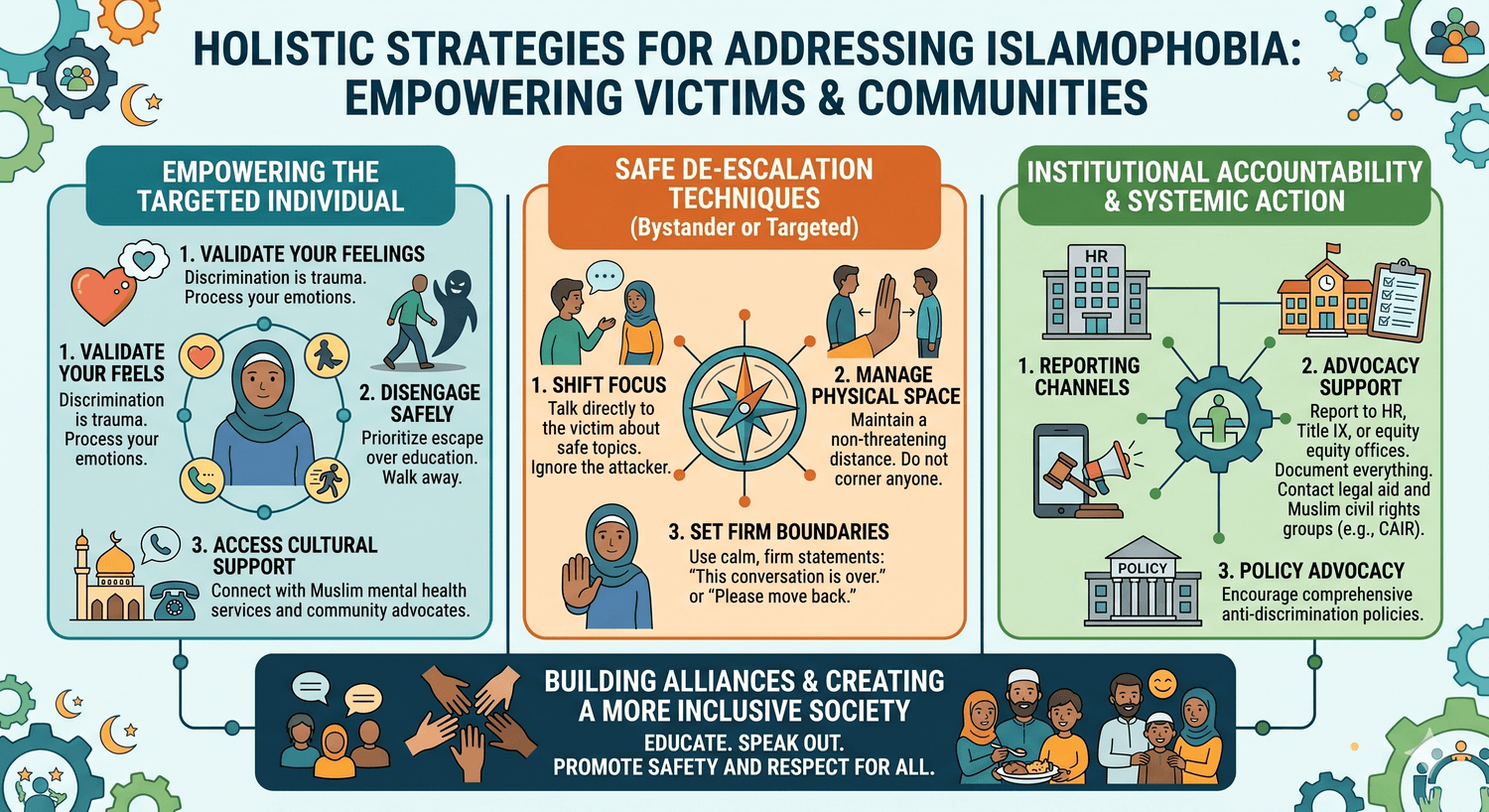
Addressing Islamophobia in America requires coordinated action. Solutions must target individual attitudes and systemic structures. Everyone has a role to play. Government, organizations, and individuals can all contribute. Change happens through sustained effort. Hope exists when communities work together. Progress is possible with the right strategies.
Education and Awareness About Islamophobia in America
Education combats ignorance that fuels Islamophobia in America. Schools should teach accurate information about Islam. Curriculum should include Muslim American history and contributions. Direct interaction with Muslims reduces prejudice. Personal connections break down stereotypes.
Community programs can facilitate interfaith dialogue. Libraries and cultural centers host educational events. These spaces allow people to learn safely. Accurate information replaces fear with understanding. Media literacy helps people recognize biased coverage.
Research shows education significantly reduces anti-Muslim attitudes. People who know Muslims personally hold fewer prejudices. Universities can offer courses on Islamophobia. Public awareness campaigns reach broader audiences. Knowledge is a powerful tool for change.
Legal Protections Against Islamophobia in America
Stronger legal frameworks can combat Islamophobia in America. Current laws prohibit religious discrimination in employment. However, enforcement remains inconsistent. The Civil Rights Act protects Muslims. But victims often don't report incidents.
States should repeal discriminatory anti-Sharia laws. These bills violate constitutional protections. Courts have struck down some provisions. All such legislation should be eliminated. Legal barriers harm entire communities.
Hate crime laws need better enforcement. Police departments require cultural sensitivity training. Prosecutors should prioritize anti-Muslim violence cases. The justice system must protect vulnerable communities. Legal remedies provide accountability and deterrence.
Community Action Against Islamophobia in America
Grassroots organizing fights Islamophobia in America effectively. Muslim advocacy organizations track incidents and provide support. CAIR offers legal assistance to victims. Local mosques serve as community resources. Unity creates strength.
Allies from other communities amplify Muslim voices. Interfaith coalitions build solidarity across religious lines. Neighbors can check on Muslim families after incidents. Simple acts of kindness matter. Everyone can contribute.
Social media campaigns raise awareness quickly. Online movements spread information and organize responses. Community members should report hate speech. Bystander intervention training helps people respond to harassment. Collective action creates safer spaces.
Policy Changes to Address Islamophobia in America
Government policies must actively combat Islamophobia in America. The Biden administration developed a national strategy. This included resources for schools and law enforcement. More comprehensive approaches are needed. Policy changes require sustained pressure.
Federal agencies should track anti-Muslim discrimination systematically. Better data collection reveals patterns. Transparency increases accountability. Congress could pass legislation protecting religious minorities. Funding should support anti-bias programs.
State and local governments can implement inclusive policies. Police departments need oversight and reform. School districts should adopt anti-discrimination curricula. City councils can pass resolutions condemning Islamophobia. Policy change starts at every level.
Conclusion
Islamophobia in America represents a serious civil rights crisis. The problem affects millions of people daily. From mental health impacts to violent hate crimes, the consequences are devastating. Workplace discrimination, school harassment, and institutional bias create ongoing challenges. Recent years have seen alarming increases in reported incidents. The 8,658 complaints in 2024 mark the highest level ever recorded.
Understanding Islamophobia in America requires recognizing its multiple forms. Interpersonal prejudice, institutional discrimination, and structural bias all play roles. The issue predates 9/11 but intensified dramatically afterward. Recent global events trigger new waves of hate. Political rhetoric and media stereotypes fuel the fire. Breaking this cycle demands coordinated action.
Solutions exist at every level of society. Education reduces ignorance and builds understanding. Stronger legal protections hold perpetrators accountable. Community organizing creates support networks. Policy changes address systemic discrimination. Everyone can contribute to fighting Islamophobia in America. Change requires sustained commitment from all of us.
Progress is possible when communities work together. Interfaith coalitions, advocacy organizations, and concerned citizens make a difference. Muslim Americans deserve to live without fear. They deserve equal treatment and respect. Building an inclusive society benefits everyone. The time to act is now.
Take Action Against Islamophobia in America Today
You can help combat Islamophobia in America starting today. Educate yourself about Islam and Muslim communities. Speak up when you witness discrimination or harassment. Support Muslim-owned businesses and advocacy organizations. Contact your representatives to demand policy changes. Attend interfaith events and build relationships. Report hate crimes to authorities immediately. Share accurate information on social media platforms. Your voice matters in this fight. Together, we can create a more just America. Stand against Islamophobia in America now.
If you are new to Islam and you want guidance built around where you actually are — not where someone thinks you should be — Start Islam Path offers courses specifically designed for this moment in your journey. Come as you are.


